> For the complete documentation index, see [llms.txt](https://docs.labatlas.com/llms.txt). Markdown versions of documentation pages are available by appending `.md` to page URLs; this page is available as [Markdown](https://docs.labatlas.com/managing-your-organization/managing-users.md).
# Managing Users & Teams
Add and manage users in your organization
## Users
Your organization’s members are listed on the **Users** page, reached from the **Organization** section of the sidebar. Every internal member can consult the directory; the controls for inviting, editing and removing users appear for Super Users and above. Before any of your colleagues can start collaborating with you in Lab Atlas, you need to invite them to your organization.
### User Roles
A user’s **role** determines what level of privileges they have within the organization and how they can help manage it & access records. By default, the user who creates the organization is assigned the highest-privileged role: **Organization Admin**. When inviting users, you can specify the role you’d like them to assume in the organization. User roles can be changed after they have joined your organization. You cannot assign a user a role higher than yours.
Roles are cumulative: each one can do everything the roles below it can, plus more.
| **Privilege** | **External User** | **User** | **Super User** | **Organization Admin** | **Account Admin** |
| ------------------------------------ | ----------------- | -------- | -------------- | ---------------------- | ----------------- |
| Create studies and assays | ✓ \* | ✓ | ✓ | ✓ | ✓ |
| Create notes | ✓ \* | ✓ | ✓ | ✓ | ✓ |
| File Manager access | ✓ \* | ✓ | ✓ | ✓ | ✓ |
| Connect personal integrations | | ✓ | ✓ | ✓ | ✓ |
| View the member directory | | ✓ | ✓ | ✓ | ✓ |
| Create API keys & use the MCP server | | ✓ † | ✓ † | ✓ † | ✓ † |
| Manage users | | | ✓ | ✓ | ✓ |
| Create projects | | | ✓ | ✓ | ✓ |
| Manage teams & assay types | | | ✓ | ✓ | ✓ |
| View the audit log | | | ✓ | ✓ | ✓ |
| Manage organization integrations | | | | ✓ | ✓ |
| Manage shared folders | | | | ✓ | ✓ |
| Manage subscription & billing | | | | ✓ | ✓ |
\* Restricted to the projects the external user has been explicitly assigned to — see [External Users](#external-users) below.
\† Available on Enterprise plans only. See [Getting Started](/developer-tools/getting-started.md) under Developer Tools.
{% hint style="info" %}
**Account Admin** is not assigned when you invite someone — it is held by the person responsible for the organization's subscription. It carries every Organization Admin privilege plus ownership of billing.
{% endhint %}
#### External Users
The 'External User' role is intended for inviting people outside of your real-world organization into your Lab Atlas organization. These might be collaborators, contract research organizations, or contract workers. External users have a more restricted set of permissions than the standard User role:
* They can only view projects, collections, shared storage folders, or organization notes that they have been explicitly added to.
* They can only create or modify studies & assays in projects they have been assigned to.
* They can only view shared folders, organization notes, and collections they have been assigned to.
* They cannot view your organization's user list.
### Inviting Users
To invite a new user to your organization, click the ‘Invite User’ button in the top-right corner of the Users page. Select the user type (Internal Member or External Collaborator) and provide an email address to send the invitation. For internal users, select the role you wish them to assume.
Internal user invitation dialog
External users do not have roles and will only be able to view & access the projects you assign them to. You can assign internal or external users to existing projects by selecting them from the search input.
External user invitation dialog
User invitations can be managed from the ‘Invitations’ tab. Clicking on the context menu of the invited user will allow you to resend the invitation or cancel it.
### Removing Users
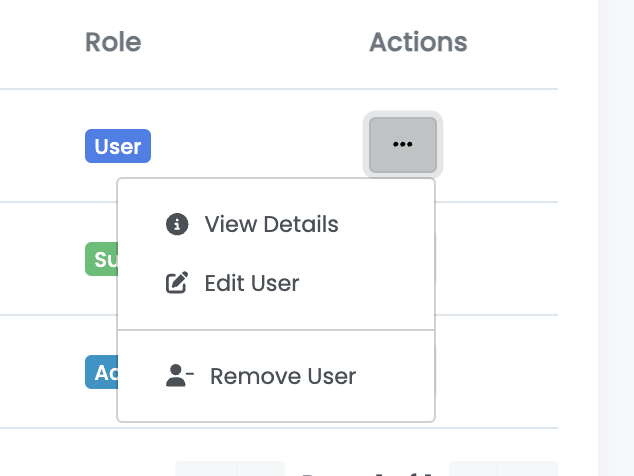
Users can be removed from your organization by clicking on a user’s context menu in the Active users table and selecting ‘Remove User’. Once confirming, the user will be deactivated and will no longer be able to log into your organization. Removed users can be viewed in the ‘Inactive’ tab of the Users dashboard, where you have the option to re-invite them.
## Teams
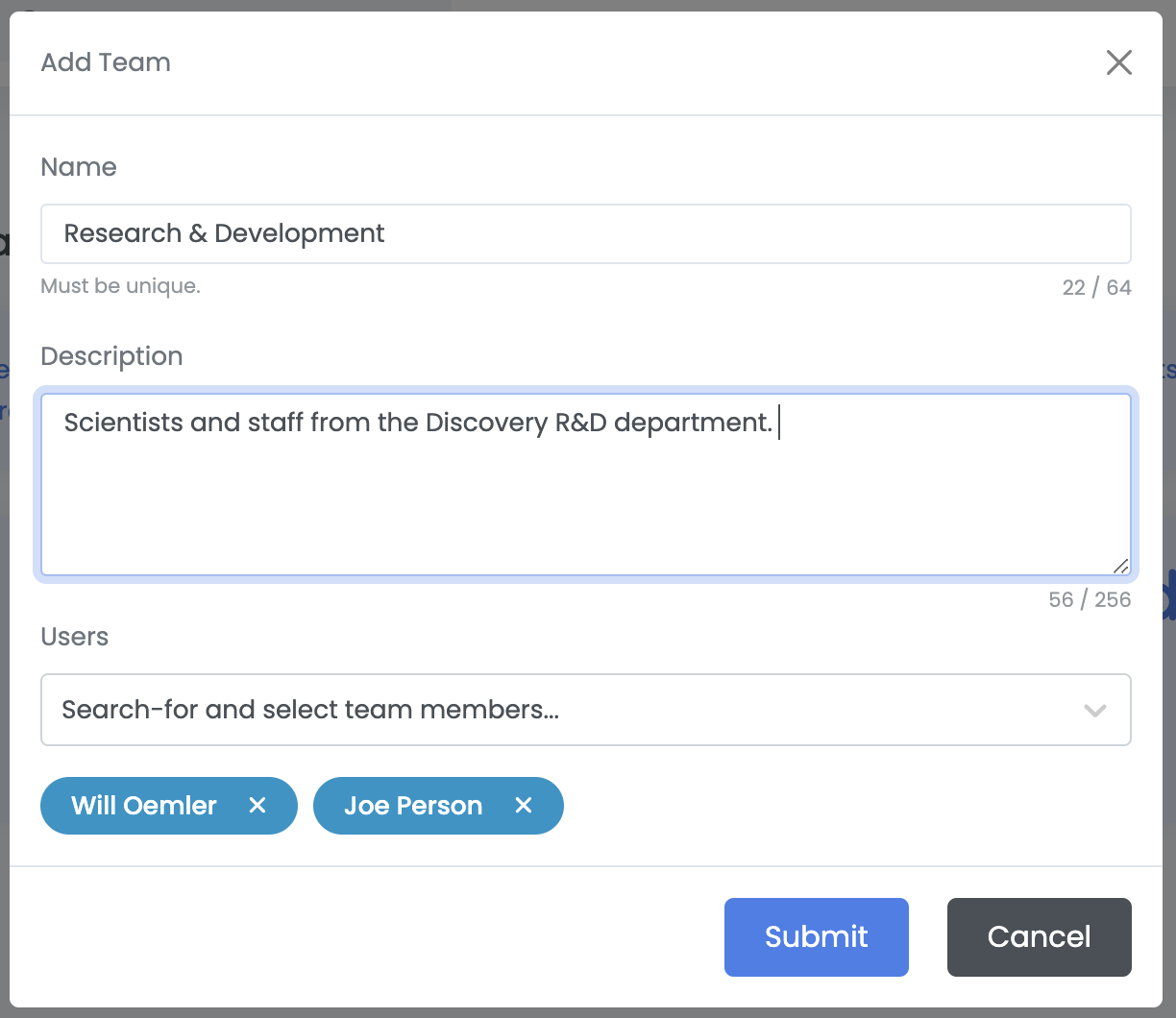
Teams are a simple way to group one-or-more users in your organization so that they can be easily assigned to projects, notes, and other resources. When a team is assigned to a resource, all of the users assigned to the team are added. Teams can be created and managed from **Settings → Organization → Teams**.